

The Plastic Stool Is Saigon's Most Underrated Design Object
You probably wouldn't put a $2 plastic stool on a moodboard. In Saigon, it might be one of the most important pieces of design in the city.
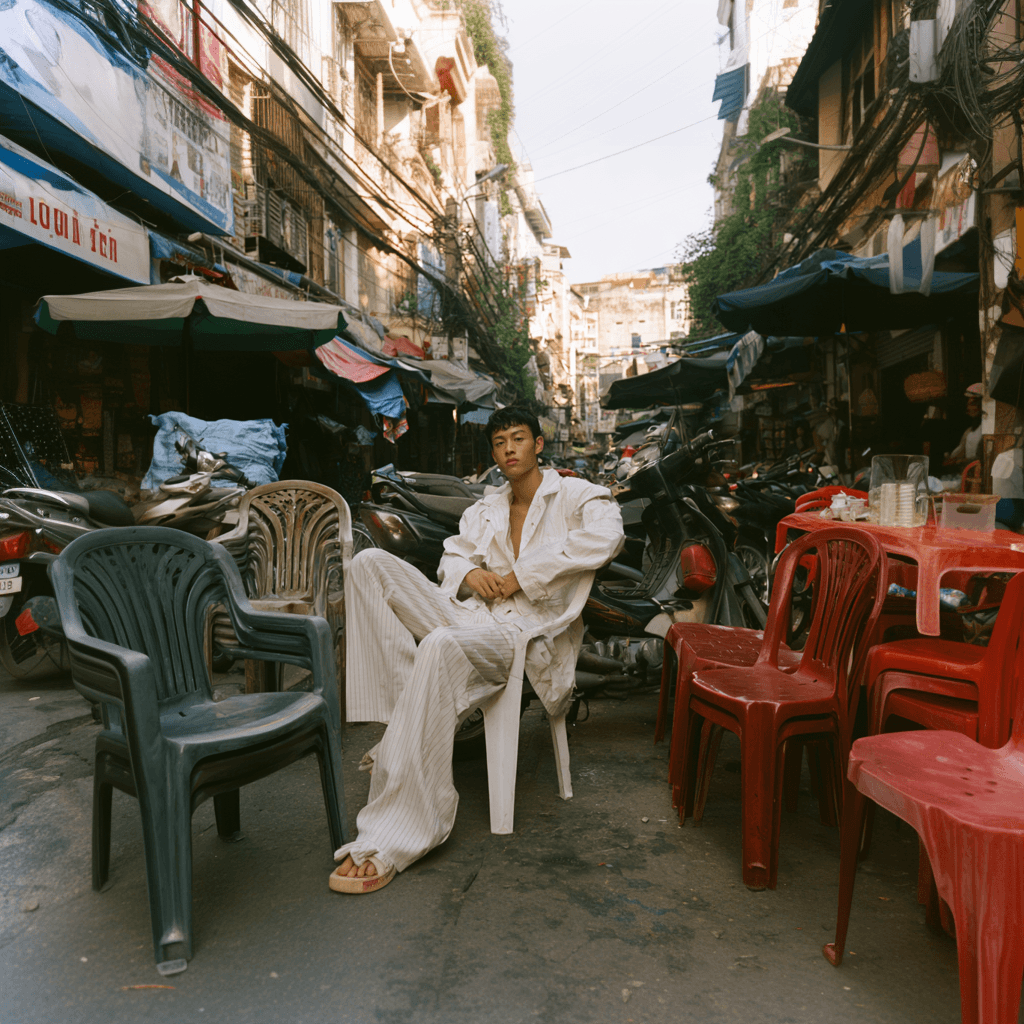
They're everywhere: outside a phở shop, next to a cà phê sữa đá, on the pavement at 11pm, suddenly pulled out when three more friends arrive. Usually red or blue, ridiculously small, stackable, light enough to carry around and cheap enough that nobody really thinks twice about them. But that little stool quietly solves a lot of problems at once: it fits the scale of the streets, works in tiny spaces, can be moved in seconds and turns practically any patch of pavement into somewhere to sit and socialise.
Good design doesn't always announce itself as design.
Sometimes it's just something that happens to fit perfectly into the way people actually live.
The plastic stool isn't trying to be Scandinavian. It isn't pretending to be Italian. It doesn't need a designer's name stamped underneath it to feel culturally relevant. It emerged from a very specific environment and became part of the visual language of the city. You could probably remove the signs, menus and shop names from a photo of Saigon and still recognise the place from a few tiny plastic stools on the pavement.
There's a lesson here for brands too. We spend an enormous amount of time making things look culturally relevant: choosing the right colours, references, fonts and visual clichés, when sometimes the more interesting question is much simpler: does this actually understand how people live?
That's the kind of cultural detail we look for at Saint-Tran. Not the obvious “Asian aesthetic” you can find on Pinterest, but the small, everyday behaviours that tell you something about a place before anyone explains it to you. Because when you're trying to bring a brand from Europe to Asia - or Asia to Europe - the good stuff is usually hiding in plain sight.
Want to find it? That's literally what we do. Email us at inquiry@sainttran.com.
September 7, 2026