

In Korea, the Babies Have Fur
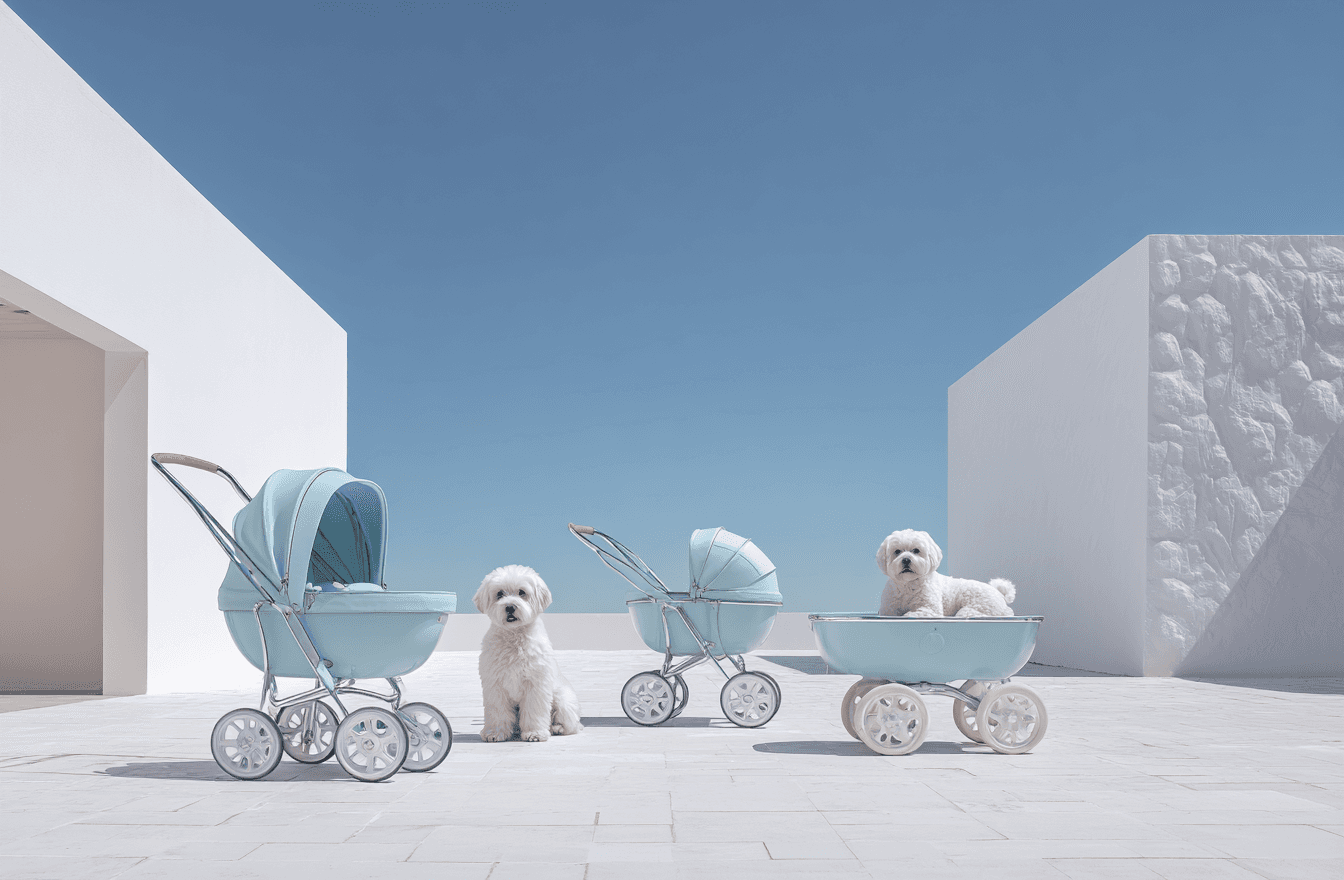
Walk through Seoul and you will notice it immediately. The strollers are not empty. They carry dogs.
Small, groomed, dressed, and held with the same attention given to a child. They have names, routines, birthdays, and carefully chosen diets. They are not treated as pets. They are treated as part of a family unit.
This is not a detail. It is a signal.
Care doesn’t disappear. It moves.
South Korea has one of the lowest birth rates in the world. Households are smaller, and the structure of daily life is shifting. Care does not disappear when those structures change. It relocates. It concentrates. It finds a new place to exist.
In this context, animals become more than companions. They become anchors. They create rhythm in a day, reasons to go out, points of connection. What used to be distributed across a wider social structure is now held within something smaller, more controlled, and more personal.
From the outside, this looks like a premium category. You see grooming salons that feel like boutiques, cafés designed around pets, accessories that sit closer to fashion than utility, and products that borrow from wellness and skincare. Everything appears elevated, considered, and intentional.
But this is not simply about premiumization. It is about legitimacy. If something is part of daily life, it needs to feel right. Right in tone, right in quality, and right in context. It needs to integrate without friction.

This is not a category. It is a system.
The more important shift is not what people buy, but how they decide. In Korea, decisions are rarely individual for long. They move through visibility, validation, and circulation. What is seen and adopted spreads quickly. What feels slightly off disappears just as quickly. There is very little space in between.
The pet category follows the same logic. It is not isolated. It is fully embedded in how the market operates.
This is where most brands get it wrong. They approach it as a growing segment, driven by demand and volume. They respond by adding more products, more features, more explanations. They treat it as an expansion problem.
But the issue is not supply. It is alignment.
When products are designed without understanding how they will be perceived, where they will appear, and how they will be evaluated, they remain external to the system. They exist, but they do not integrate. They are present, but they are not chosen.
What works is rarely louder. It is more precise. It understands how people already live, how they move through spaces, how they share and validate what they see. It enters with clarity, fits within existing codes, and becomes visible in the right places at the right time. It allows itself to be quickly understood and just as quickly adopted.
This is less about standing out and more about fitting exactly where it matters.
August 28, 2026